Here’s a startling fact: roughly 40% of food produced globally never reaches consumers, with a significant portion lost due to logistics failures! I’ve analyzed agricultural supply chains extensively, and the waste is heartbreaking—fresh produce rotting in transit, grain shipments delayed past quality windows, and temperature-sensitive crops arriving spoiled. But there’s hope: artificial intelligence is revolutionizing agro logistics in ways that seemed impossible just five years ago.
Traditional agricultural logistics operated on gut instinct, seasonal patterns, and reactive problem-solving. Today’s AI-powered systems predict demand with remarkable accuracy, optimize routes in real-time, and monitor crop conditions throughout the journey! Whether you’re a farmer looking to get products to market efficiently, a logistics provider managing perishable cargo, or a food company ensuring quality from farm to shelf, understanding AI’s role in agro logistics is essential.
In this comprehensive guide, we’ll explore how artificial intelligence is transforming agricultural supply chains, reducing waste, improving profitability, and ensuring fresher food reaches consumers faster than ever before.
Understanding the Agro Logistics Challenge
Agricultural logistics faces unique challenges that make it far more complex than general freight management. Perishability creates unforgiving time constraints—lettuce has days, not weeks, to reach consumers. Seasonality causes dramatic demand fluctuations that strain logistics capacity. Weather unpredictability affects both crop yields and transportation conditions. And quality degradation occurs continuously from harvest to consumption.
The financial impact is staggering. According to the Food and Agriculture Organization, post-harvest losses cost the global economy over $1 trillion annually, with logistics failures accounting for a substantial portion. In developing markets, losses can reach 50% for highly perishable crops like tomatoes and berries.
Traditional logistics systems struggle with these complexities because they rely on historical averages and human decision-making that can’t process the volume of variables affecting agricultural supply chains. Enter artificial intelligence—technology that can analyze thousands of data points simultaneously and make optimized decisions in milliseconds.
What AI Brings to Agricultural Supply Chains
AI in agro logistics encompasses several technologies working together: machine learning algorithms that identify patterns in historical data, predictive analytics that forecast future conditions, computer vision systems that assess crop quality, natural language processing that interprets market signals, and optimization engines that calculate ideal logistics strategies.
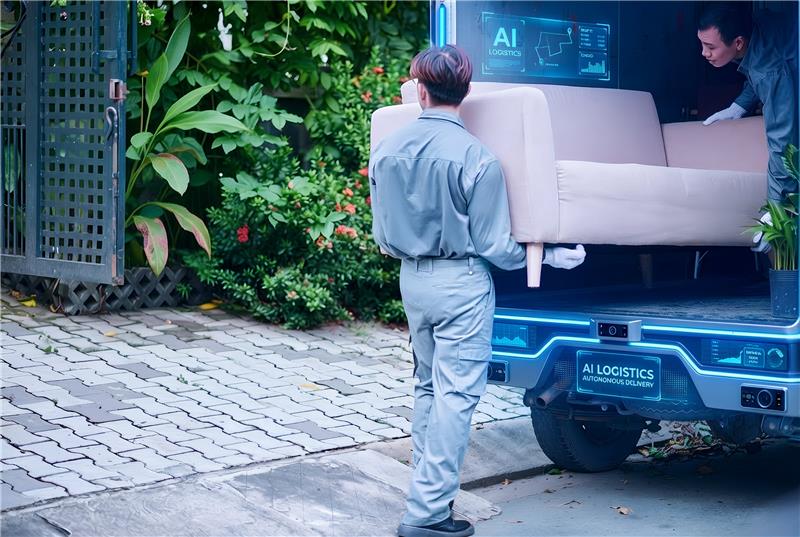
The transformation we’re witnessing in agriculture differs from other industries because of the biological nature of cargo. Just as logistics companies work to reduce damage in furniture transport, AI must account not just for location and timing but for ripeness, respiration rates, ethylene production, and countless other factors affecting crop viability.
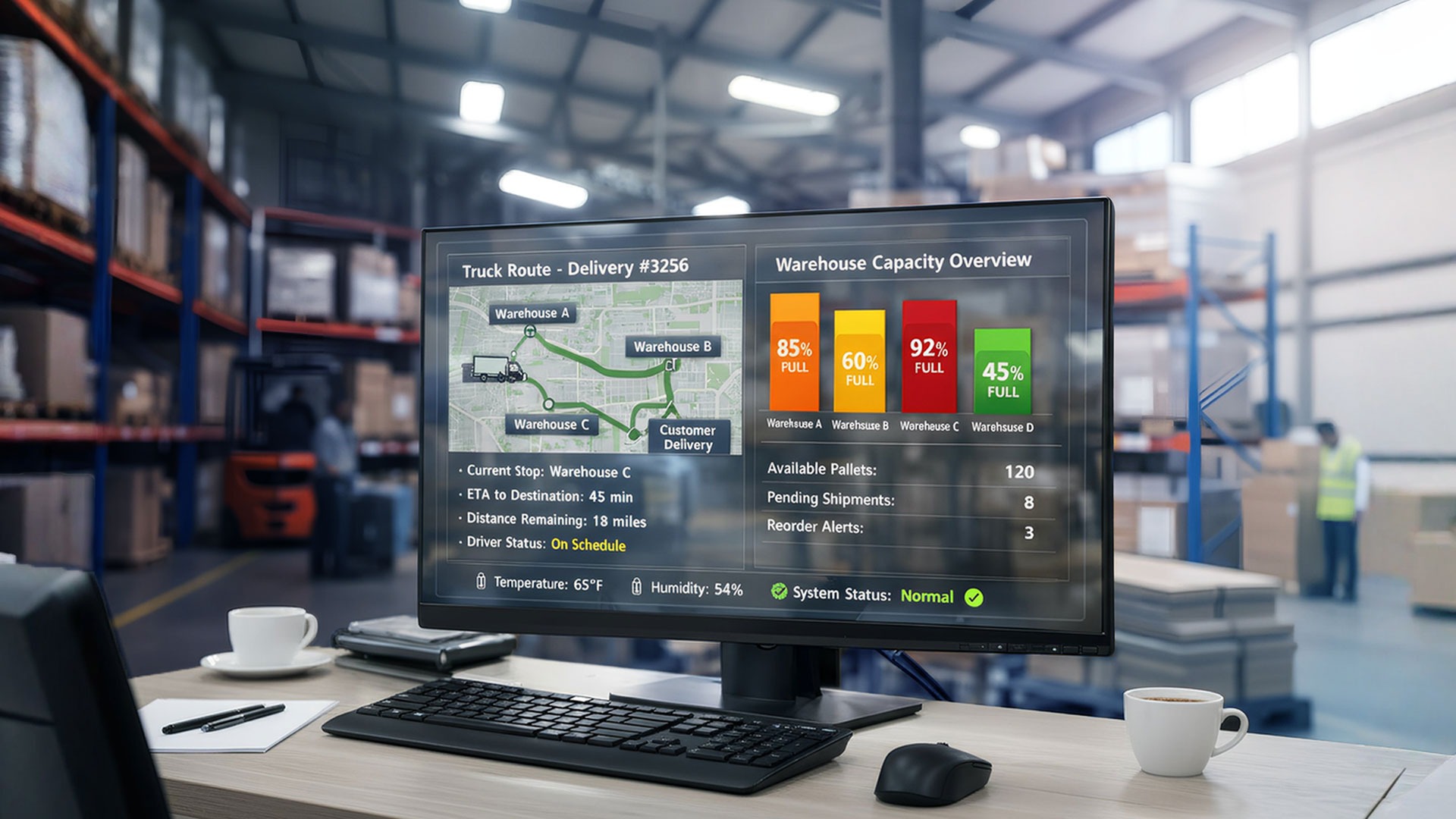
These systems integrate data from multiple sources: weather forecasts, satellite imagery showing crop conditions, IoT sensors monitoring temperature and humidity, market price data, fuel costs, traffic patterns, and historical performance metrics. The result is decision-making that surpasses human capabilities in both speed and accuracy.
Demand Forecasting and Planning
AI-powered demand forecasting has transformed how agricultural products move through supply chains. Traditional forecasting relied on last year’s data and seasonal trends. AI models incorporate hundreds of variables: weather patterns affecting both supply and demand, economic indicators influencing purchasing power, social media trends revealing consumer preferences, competitor activities, holiday schedules, and even local events that impact food consumption.
These sophisticated models predict not just overall demand but regional variations, product preferences, and price sensitivities. A produce distributor can know three weeks in advance that demand for organic berries will spike 23% in metropolitan areas due to an emerging health trend, allowing proactive logistics planning.
The accuracy improvement is dramatic. Companies report forecast accuracy increasing from 65-75% with traditional methods to 85-95% with AI systems. This precision enables better inventory management, reduced waste, and optimized transportation scheduling.
Route Optimization and Dynamic Routing
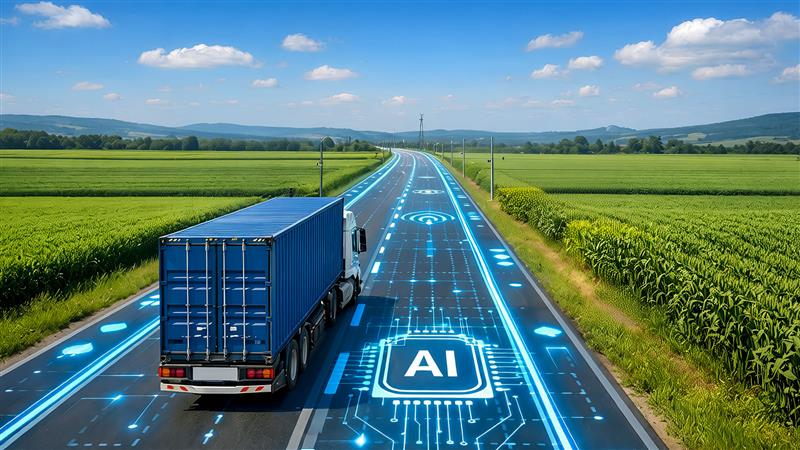
AI-powered route optimization goes far beyond finding the shortest path. These systems consider vehicle capacity, delivery time windows, driver hours-of-service regulations, fuel efficiency, road conditions, weather forecasts, and—crucially for perishables—optimal temperature zones to maintain crop quality.
Dynamic routing adjusts routes in real-time as conditions change. If a highway accident creates delays, the system instantly recalculates, rerouting trucks to avoid spoilage-inducing delays. If temperature sensors detect a refrigeration system struggling, the AI might reroute to a closer facility for cargo transfer rather than risking complete load loss.
Research from the USDA Agricultural Research Service shows that AI route optimization reduces transportation time by 15-30% for perishable agricultural products, directly translating to fresher products and lower spoilage rates. Companies also report fuel cost reductions of 10-20%, and businesses can reduce logistics costs using AI across multiple operational areas.
Quality Monitoring and Shelf-Life Prediction
Computer vision AI systems can assess crop quality with accuracy matching or exceeding human inspectors. Cameras capture images of produce, and AI algorithms analyze color, size, blemishes, ripeness indicators, and other quality factors. This automated grading happens in seconds rather than minutes, dramatically increasing throughput while maintaining consistency.
More impressively, AI predicts remaining shelf life based on current condition and anticipated transport conditions. The system might determine that tomatoes currently at 70% ripeness will reach optimal eating quality in 4 days under standard refrigeration, informing logistics decisions about which distribution channels to use and which retailers to prioritize.
IoT sensors throughout the supply chain feed data to AI systems monitoring temperature, humidity, ethylene gas levels, and vibration. When conditions deviate from optimal ranges, AI doesn’t just alert operators—it recommends specific interventions and predicts the impact on shelf life, enabling informed decisions about whether to expedite delivery, adjust pricing, or redirect to processing facilities.
Inventory Management and Warehouse Automation
AI-driven inventory management for agricultural products balances the competing demands of availability and minimizing waste. These systems determine optimal inventory levels for each product based on predicted demand, shelf life, and supply reliability. For a distribution center handling 200 produce varieties, AI might maintain 3-day inventory of highly perishable lettuce while keeping 10-day stocks of hardy root vegetables.
Warehouse automation guided by AI includes robotic picking systems that handle delicate fruits without bruising, automated storage systems that prioritize older inventory for first-out rotation, and climate zone management that maintains optimal conditions for different crop types stored in the same facility.
The efficiency gains are remarkable. One large produce distributor reported that AI-optimized inventory management reduced waste by 35% while improving product availability by 18%—simultaneously cutting costs and improving service levels.
Predictive Maintenance for Cold Chain Equipment
Cold chain integrity is critical for agricultural logistics. A refrigeration failure can destroy an entire truckload of produce worth tens of thousands of dollars. AI predictive maintenance systems monitor equipment performance data—compressor temperature, refrigerant pressure, power consumption, vibration patterns—to predict failures before they occur.
Machine learning models trained on thousands of refrigeration units learn the subtle patterns that precede failures. The system might detect that a particular compressor’s vibration signature has changed slightly, predicting failure in 48-72 hours. This enables scheduled maintenance during planned downtime rather than catastrophic failure during a critical shipment.
Companies using AI predictive maintenance report 40-60% reduction in unexpected equipment failures and 25-35% lower maintenance costs through optimized scheduling and preventing secondary damage from undetected issues.
Market Intelligence and Price Optimization
AI systems analyze global market data to identify pricing opportunities and risks. They monitor commodity exchanges, regional price variations, import/export data, currency fluctuations, and even social sentiment to forecast price movements. This intelligence informs both procurement and sales decisions.
For farmers and cooperatives, AI provides insights about optimal harvest timing and market channels. The system might recommend delaying tomato harvest by three days because price forecasts show a 12% increase due to supply constraints in competing regions, or suggest directing premium apples to export markets where prices are 20% higher than domestic channels.
Dynamic pricing algorithms adjust prices in real-time based on inventory levels, remaining shelf life, demand signals, and competitive positioning. A distributor might slightly reduce prices on produce approaching optimal ripeness to accelerate sales before quality decline requires deeper discounting.
Sustainability and Waste Reduction
AI’s impact on agricultural sustainability extends beyond operational efficiency. By optimizing the entire supply chain, AI dramatically reduces food waste—one of the most impactful sustainability interventions possible. Every ton of food waste prevented saves the water, fertilizer, land, and energy invested in producing it.
Route optimization reduces fuel consumption and emissions. Better demand forecasting prevents overproduction. Quality monitoring ensures products are used appropriately—slightly blemished produce can be directed to processing rather than being discarded. According to the World Resources Institute, AI-optimized agricultural supply chains can reduce food waste by 30-50%.
Some systems even optimize for sustainability metrics directly, balancing delivery speed against carbon footprint based on customer preferences and regulatory requirements. A retailer might choose a slightly slower route that consolidates shipments and reduces emissions for products where extra transit time doesn’t impact quality.
Real-World Success Stories
Walmart implemented AI across its fresh food supply chain, using machine learning to forecast demand for thousands of produce items across stores. They combined this with blockchain tracking and IoT monitoring. Results included 30% reduction in food waste, improved freshness scores, and significant cost savings.
Blue Yonder (formerly JDA Software) provides AI solutions for agricultural cooperatives. One grain cooperative using their system improved logistics efficiency by 28%, reduced spoilage by 40%, and increased farmer payments through better market timing and reduced waste.
Driscoll’s, a major berry producer, uses AI for harvest planning and logistics coordination. Their system predicts optimal picking times, coordinates harvester deployment, and schedules transportation to ensure berries reach consumers at peak quality. They report significantly improved shelf life at retail and reduced field waste.
Implementation Challenges and Considerations
Despite AI’s tremendous potential, implementation faces challenges. Data availability and quality vary widely—small farms may lack the sensors and systems generating data AI needs. Integration with existing systems requires technical expertise many agricultural businesses lack. Change management proves difficult when staff are accustomed to traditional decision-making.
Cost considerations matter, though declining technology prices are making AI increasingly accessible. Cloud-based AI services offer subscription models that eliminate large upfront investments. Many governments offer grants and subsidies for agricultural technology adoption, recognizing the public benefits of efficient food systems.
Starting small makes sense for most organizations. Implement AI in one area—perhaps route optimization or demand forecasting—prove value, learn lessons, then expand. This incremental approach builds organizational capability while delivering measurable results.
Conclusion
The growing need for AI in agro logistics isn’t hype—it’s a response to urgent challenges threatening food security, sustainability, and agricultural profitability! From predicting demand with unprecedented accuracy to optimizing routes that preserve crop quality, AI is solving problems that have plagued agricultural supply chains for generations.
The evidence is compelling: companies implementing AI see waste reduction of 30-50%, cost savings of 15-25%, and improved product quality that drives customer satisfaction and premium pricing. As global population grows, climate change intensifies, and consumer expectations for fresh, sustainable food increase, AI isn’t optional—it’s essential.
Ready to explore AI for your agricultural operations? Start by identifying your biggest pain points—whether that’s spoilage, logistics costs, demand forecasting, or quality consistency. Then investigate AI solutions specifically designed for agricultural applications. The investment in AI isn’t an expense—it’s a strategic necessity for competing in modern food systems while feeding a growing world sustainably!