The delivery wars aren’t about speed versus cost anymore—they’re about knowing which weapon to use when.
Remember when “fast delivery” meant getting your package in 5-7 business days? Those days feel like ancient history. I recently ordered a phone charger at 2 PM and had it in my hands by 6 PM the same day—that’s instant logistics in action, and it’s fundamentally different from the traditional logistics that dominated for decades.
The logistics industry is experiencing its biggest transformation since containerized shipping. On one side: traditional logistics—the time-tested system of scheduled routes, warehousing, and batched deliveries that built global commerce. On the other: instant logistics, a tech-driven disruptor promising same-day, even same-hour delivery powered by algorithms, gig workers, and hyperlocal fulfillment.
But here’s what most people miss: these aren’t just different speeds of the same service. They’re fundamentally different operating models with distinct economics, technology stacks, and use cases. Understanding the difference determines whether your business survives the delivery revolution—or becomes another cautionary tale about companies that picked the wrong model.
The Old Guard: Traditional Logistics Explained
Traditional logistics is the backbone that built modern commerce. It operates on principles perfected over 50+ years: consolidate shipments to achieve economies of scale, optimize routes for efficiency, warehouse inventory strategically, and deliver on predictable schedules.
The model is elegant in its simplicity. A package enters a network at a local facility, gets sorted and consolidated with thousands of others headed in the same direction, travels via truck or plane to a regional hub, gets sorted again for final-mile delivery, and arrives 3-7 days later. Every step is planned, scheduled, and optimized for cost efficiency.
UPS delivers 24 million packages daily using this model. FedEx moves 16 million. The infrastructure is staggering—massive sorting facilities processing 400,000 packages per hour, fleets of tens of thousands of vehicles, sophisticated route optimization algorithms that have been refined for decades.
The economics work because of volume. When you’re moving millions of packages daily along established routes, the per-package cost drops dramatically. A typical traditional logistics delivery costs $3-8, depending on distance and service level. That’s sustainable because the fixed costs of infrastructure and labor get spread across massive volume.
But traditional logistics has a fundamental constraint: speed is expensive. Faster service requires dedicated capacity, rush handling, and priority processing—all of which destroy the economies of scale that make the model profitable.
The Disruptor: Instant Logistics Arrives
Instant logistics emerged around 2014-2015 as tech platforms applied the Uber playbook to delivery. The premise was simple: what if we could match delivery demand with available capacity in real-time, using algorithms and gig workers instead of scheduled routes and full-time drivers?
The model inverts traditional logistics assumptions. Instead of consolidating packages and planning efficient routes, instant logistics responds to individual delivery requests immediately. Instead of large centralized warehouses, it uses micro-fulfillment centers, dark stores, and even retail locations as inventory sources. Instead of professional drivers on scheduled routes, it deploys gig workers with cars, bikes, or scooters responding to delivery requests via smartphone apps.
Companies like Wahyd Logistics are pioneering hybrid approaches that combine the reliability of traditional logistics with the speed advantages of instant delivery, recognizing that businesses increasingly need both capabilities.
The results are dramatic. DoorDash coordinates 4 million deliveries daily, most completing within 30-60 minutes. Instacart built a $40 billion business around same-hour grocery delivery. Gopuff promises delivery in 30 minutes or less from over 600 micro-fulfillment centers.
But instant logistics only works in dense urban areas where short distances and high order volume justify the premium economics. A typical instant delivery costs $15-25—2-3x traditional pricing. That premium is sustainable only when speed creates enough value that customers willingly pay more.
The Technology Divide
The technology difference between these models reveals why they’re fundamentally different businesses, not just different service tiers.
Traditional logistics runs on systems built for planning and optimization. Warehouse Management Systems (WMS) track inventory across vast facilities. Transportation Management Systems (TMS) plan routes weeks in advance. Electronic Data Interchange (EDI) connects partners using protocols from the 1980s. The technology stack prioritizes reliability, scalability, and integration with existing enterprise systems.
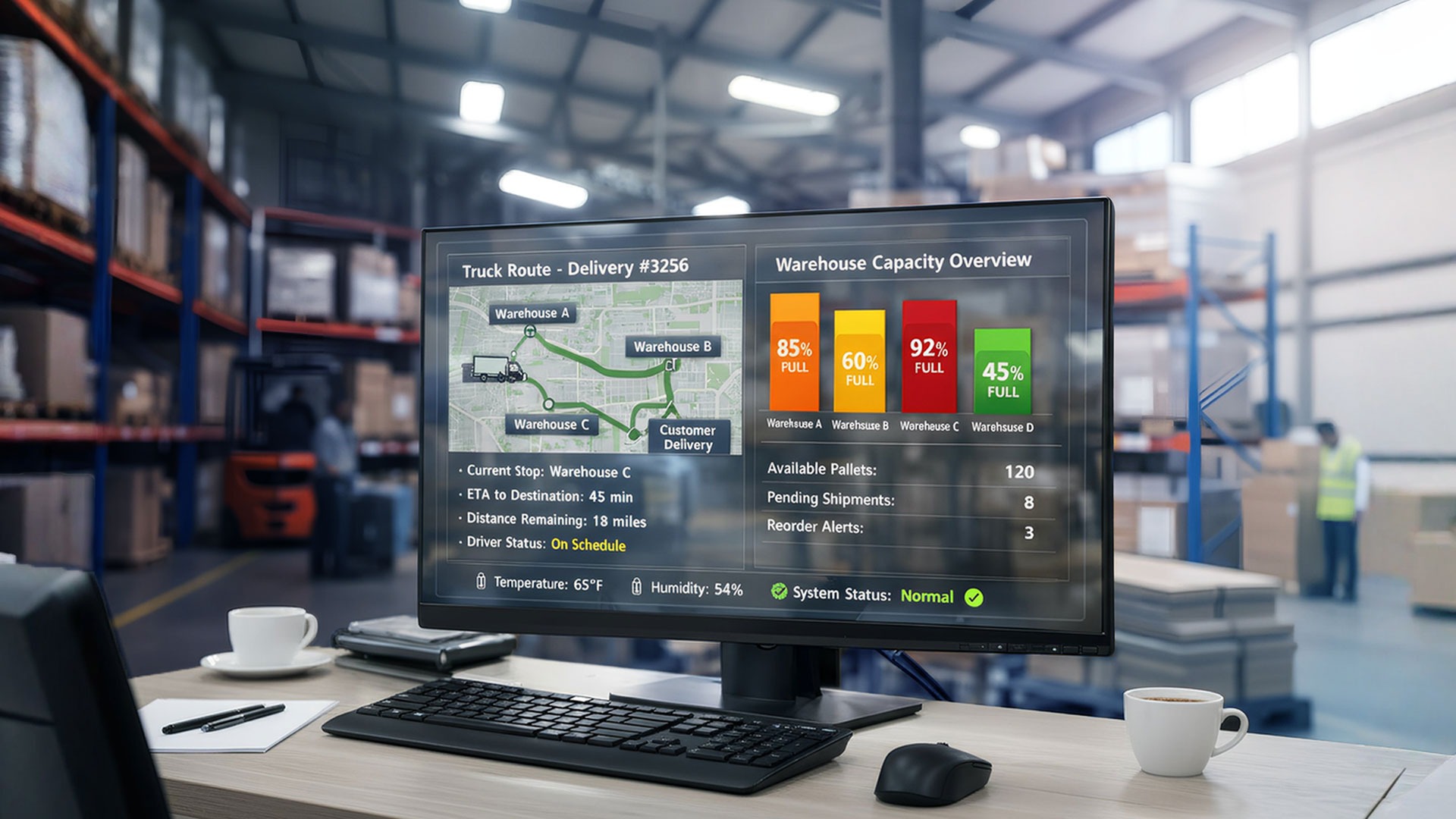
Instant logistics operates on real-time matching algorithms that would make Uber’s surge pricing look simple. These systems must simultaneously balance thousands of variables: available drivers, current location, delivery destinations, traffic conditions, driver ratings, historical performance, and predicted demand patterns. Decisions happen in milliseconds, and the system adapts continuously as conditions change.
The data usage patterns differ fundamentally. Traditional logistics analyzes historical data to plan future operations—last year’s holiday shipping patterns inform this year’s capacity planning. Instant logistics processes real-time data to make immediate decisions—current traffic conditions determine which driver gets assigned to which delivery right now.
This technological divergence explains why traditional logistics companies struggle to simply “add” instant delivery capabilities. It’s not a feature—it’s a different technology stack requiring different expertise, infrastructure, and operational models. Companies like Amazon have spent billions building parallel systems to operate both models simultaneously.
The Economics Tell the Story
Let’s talk money, because that’s where the rubber meets the road.
Traditional logistics achieves profitability through volume and efficiency. UPS’s operating margin hovers around 10-11%, generated by moving massive volume at relatively low per-unit cost. A cross-country shipment might cost them $5-6 in actual costs (fuel, labor, facilities) and sell for $8-10, generating 30-40% gross margins that support the overhead of a massive network.
Instant logistics economics work completely differently. The per-delivery cost might be $12-18 (higher driver compensation, less route efficiency, smaller orders), but it sells for $20-30. Gross margins look similar, but the business model is fundamentally different. There’s no massive infrastructure to depreciate, but also no economies of scale to leverage as volume grows.
This creates interesting strategic implications. Traditional logistics companies have incentive to grow volume—more packages means better unit economics. Instant logistics companies have incentive to increase order value and reduce delivery distance—optimizing the value-to-cost ratio of each transaction rather than maximizing transaction volume.
The break-even analysis is illuminating. For a typical e-commerce company, instant logistics makes economic sense when:
- Order value exceeds $50 (justifying the delivery premium)
- Customer lifetime value is high (acquisition cost amortized over many orders)
- Speed creates competitive differentiation (customers can’t get it elsewhere)
- Geography is favorable (dense urban areas with short delivery distances)
Outside those conditions, traditional logistics wins on pure economics. Which explains why businesses reduce logistics costs using AI to intelligently route orders through the most cost-effective model for each specific delivery.
The Geography Problem
Geography exposes the starkest difference between these models. Traditional logistics provides reasonably uniform service nationally and globally. A package going from Manhattan to rural Montana takes longer than one staying in Manhattan, but the service exists and the pricing is predictable.
Instant logistics has dramatic geographic inequality. Manhattan gets 30-minute delivery from dozens of providers. Rural Montana gets nothing. Even within metro areas, coverage is uneven—dense urban cores get excellent service while suburbs and exurbs are afterthoughts.
This isn’t a temporary problem waiting to be solved. It’s fundamental to the economics. Instant logistics requires density—enough delivery demand per square mile to keep drivers busy and delivery distances short. When you need drivers to complete 3-4 deliveries per hour to make economics work, having deliveries 20 miles apart destroys the model.
Traditional logistics wins in sprawl and rurality because consolidation overcomes distance. Whether you’re delivering one package or one hundred to Montana, the truck is going there anyway. Incremental packages add minimal cost.
The implications for business strategy are significant. If your customer base is national, you can’t rely solely on instant logistics. If you’re urban-focused selling high-value products, instant logistics might be viable. Most companies need both—instant for urban customers who’ll pay for speed, traditional for everyone else.
Labor Models and Their Discontents
The workforce difference between these models has become politically and socially contentious, not just operationally different.
Traditional logistics employs professional drivers—often union members with CDL licenses, benefits, retirement plans, and career paths. These are good middle-class jobs. A UPS driver might earn $40-45 per hour with benefits after several years. The workforce is trained, professional, and accountable through employment relationships.
Instant logistics runs on gig workers—independent contractors using their own vehicles, working flexible schedules, paid per delivery. A typical gig delivery driver might earn $15-25 per hour before vehicle expenses. There are no benefits, no job security, and limited career progression. But there’s also flexibility that traditional employment doesn’t offer.
The political debate around gig worker classification continues raging, with California’s Prop 22 serving as a bellwether for how this gets resolved. But from a pure operational perspective, the gig model enables the instant logistics business model. The flexibility to have workers available during peak demand without paying them during slow periods is essential to making the economics work.
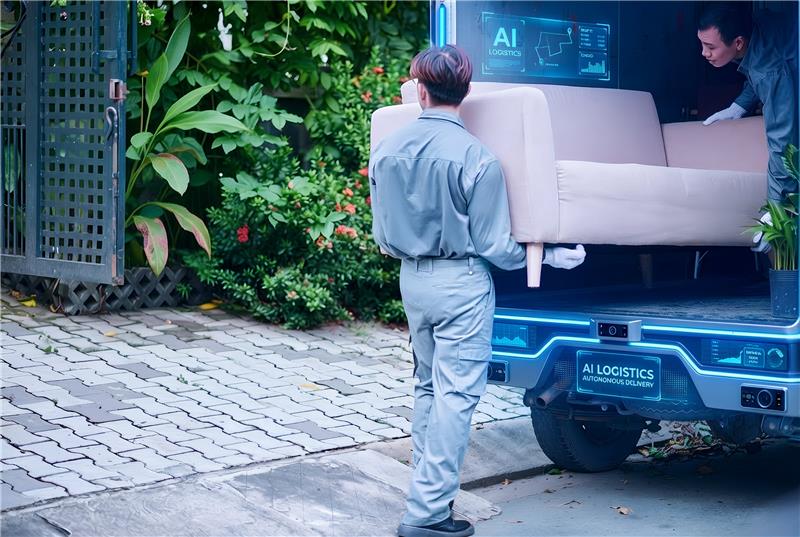
Traditional logistics companies can’t easily shift to gig labor without destroying their operational excellence. Professional drivers know their routes intimately, develop relationships with regular delivery locations, and bring expertise that matters for complex deliveries. The same principles that reduce damage in furniture transport apply broadly—professional expertise matters for quality outcomes.
Where This Is Heading
The evolution isn’t toward one model winning and the other dying. It’s toward specialization and hybridization.
Traditional logistics is getting faster through technology and network optimization. Amazon’s traditional logistics network now delivers most Prime orders in 1-2 days nationally—far faster than “traditional” implies, achieved through strategic inventory positioning and massive infrastructure investment. But it’s still fundamentally a planned, scheduled, consolidated network.
Instant logistics is getting more efficient through better algorithms, optimized micro-fulfillment center locations, and operational improvements. As networks mature and density increases, per-delivery costs are dropping. But it’s still fundamentally a real-time, on-demand, premium-priced service.
The real action is in hybrid models. Target uses stores as fulfillment centers for same-day delivery, combining traditional inventory infrastructure with instant fulfillment capabilities. Walmart acquired last-mile delivery technology while leveraging their massive distribution network. Amazon operates both Prime (1-2 day traditional) and Prime Now (instant) from different infrastructure.
These hybrid approaches recognize a fundamental truth: different products and customer needs require different logistics solutions. Emergency medication needs instant delivery. Bulk paper towels work fine with traditional shipping. Premium customers expect speed. Price-sensitive customers optimize for cost.
The Strategic Choice
So which model should your business use? The answer is probably “both,” but strategically deployed.
Use instant logistics when:
- Speed creates competitive differentiation customers will pay for
- Order values justify the premium delivery cost
- You serve dense urban markets where instant logistics is viable
- Product characteristics suit instant delivery (small, light, high-value)
- Customer expectations demand speed (food, medicine, emergency items)
Use traditional logistics when:
- Cost efficiency matters more than speed
- Geographic coverage is important
- Products are large, heavy, or low-margin
- Delivery timing is predictable and flexible
- You need proven reliability for business-critical shipments
The companies winning in 2026 aren’t choosing one or the other—they’re building the operational flexibility to use both intelligently, routing each order through the most appropriate model based on product, customer, geography, and economics.
The Bottom Line
Instant logistics and traditional logistics represent fundamentally different approaches to the same problem: moving products from point A to point B. One optimizes for speed and flexibility at premium price points. The other optimizes for cost and scalability with predictable timeframes.
The transformation isn’t about instant logistics replacing traditional logistics. It’s about expanding the solution space—giving businesses and consumers more options that better match specific needs. Just as you wouldn’t use a Ferrari for hauling furniture or a pickup truck for racing, you shouldn’t use instant logistics for everything or traditional logistics for everything.
The strategic imperative is building optionality. Work with providers who enable both models. Design operations that can route orders intelligently. Segment customers based on their willingness to pay for speed. Position inventory to enable multiple fulfillment options.
The delivery wars will be won not by the fastest or the cheapest, but by the smartest—those who deploy the right logistics model for each specific situation. That’s not a technology problem or an infrastructure problem. It’s a strategy problem.
And in logistics, strategy increasingly determines survival.
The revolution isn’t making everything instant. It’s making everything optimized.