Introduction:
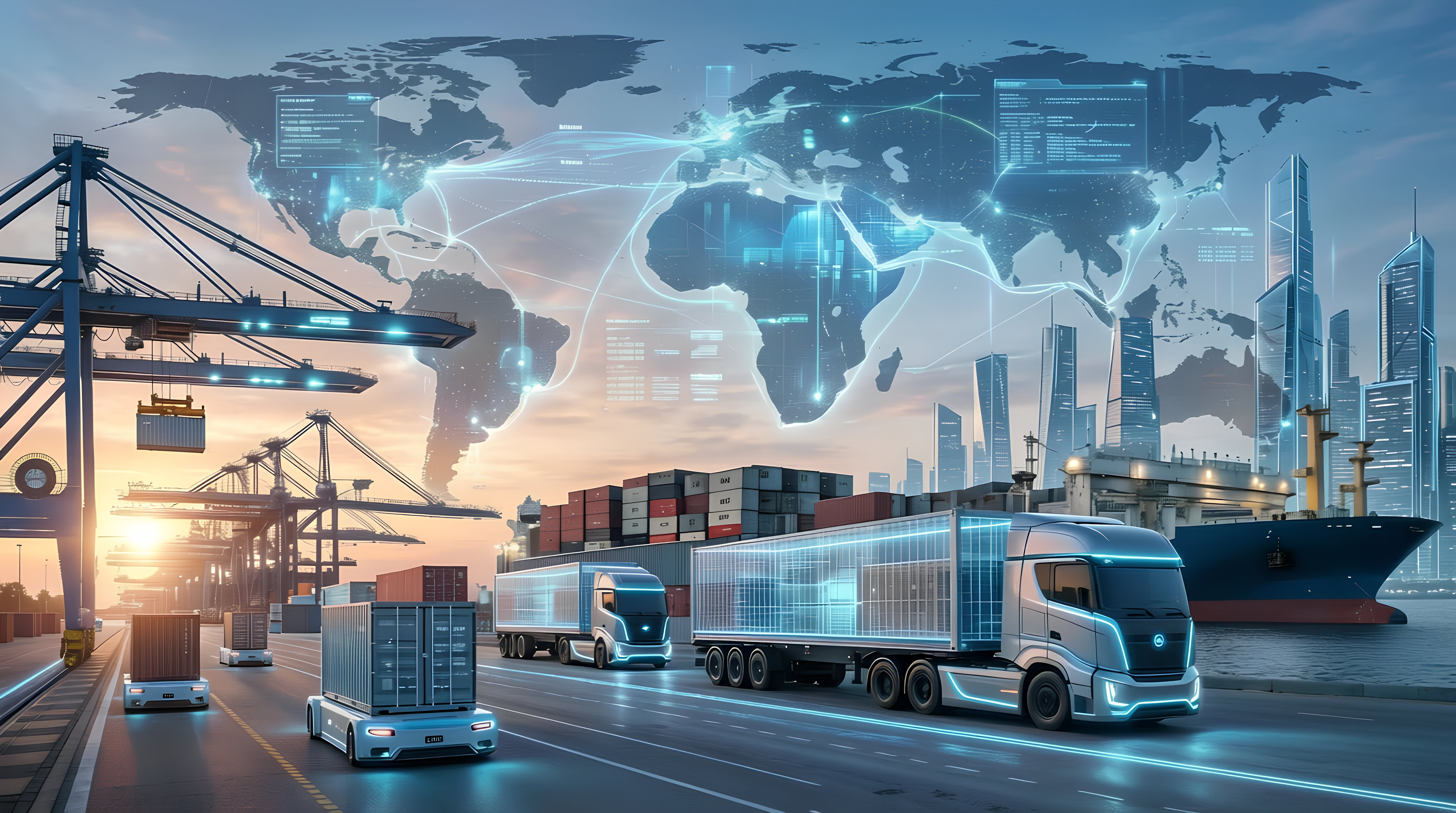
The global logistics industry moves over $9 trillion worth of goods annually by road, yet up to 28% of truck miles are driven empty, a staggering inefficiency that AI enabled road freight is now eliminating. We’ve watched this transformation unfold across the supply chain landscape, and the results are nothing short of revolutionary!
Traditional road freight operations have long struggled with unpredictable delays, suboptimal routing, and reactive decision-making. But today’s AI-powered systems are changing everything. From predictive logistics that anticipate disruptions before they happen to smart route optimization that saves millions in fuel costs, artificial intelligence is fundamentally reshaping how goods move across our highways and streets.
The convergence of machine learning, real-time data analytics, and logistics automation has created an unprecedented opportunity for supply chain professionals. Companies implementing AI enabled road freight solutions are seeing 15-25% reductions in operational costs, dramatic improvements in delivery accuracy, and enhanced sustainability metrics. This isn’t just incremental improvement, it’s a complete paradigm shift in how we think about transportation logistics.
Understanding AI Enabled Road Freight Technology
At its core, AI enabled road freight represents the integration of advanced computational intelligence into every aspect of transportation operations. This technology stack combines machine learning algorithms that continuously analyze vast datasets of historical shipping patterns, computer vision systems that can identify cargo and assess damage in milliseconds, and natural language processing tools that streamline documentation workflows. The sophistication of these systems lies not in any single component, but in how they work together to create an intelligent freight ecosystem.
What truly distinguishes AI from traditional logistics management systems is the fundamental shift from reactive to proactive operations. Legacy systems operate on predefined rules and static optimization, they make decisions based on fixed parameters that someone programmed months or years ago. AI systems, in contrast, learn and adapt continuously! They recognize patterns that human operators might miss, adjust strategies based on real-world performance, and improve their decision-making with every shipment processed.
Predictive Logistics: Anticipating Disruptions Before They Occur
Predictive logistics represents perhaps the most transformative application of AI in road freight operations. Instead of reacting to problems as they occur, a breakdown here, a delay there, a capacity shortage somewhere else, predictive systems identify potential issues before they impact operations. This proactive approach fundamentally changes the economics and reliability of freight transportation.
The return on investment for predictive logistics implementation extends beyond cost reduction. Companies report dramatic improvements in on-time delivery performance, with some achieving 98%+ reliability rates. Customer satisfaction increases as accurate ETAs become the norm rather than the exception. Perhaps most importantly, the competitive advantage gained through predictive capabilities creates a virtuous cycle, better service attracts more volume, which generates more data, which further improves the AI models’ accuracy.
Smart Route Optimization and Route Optimization AI
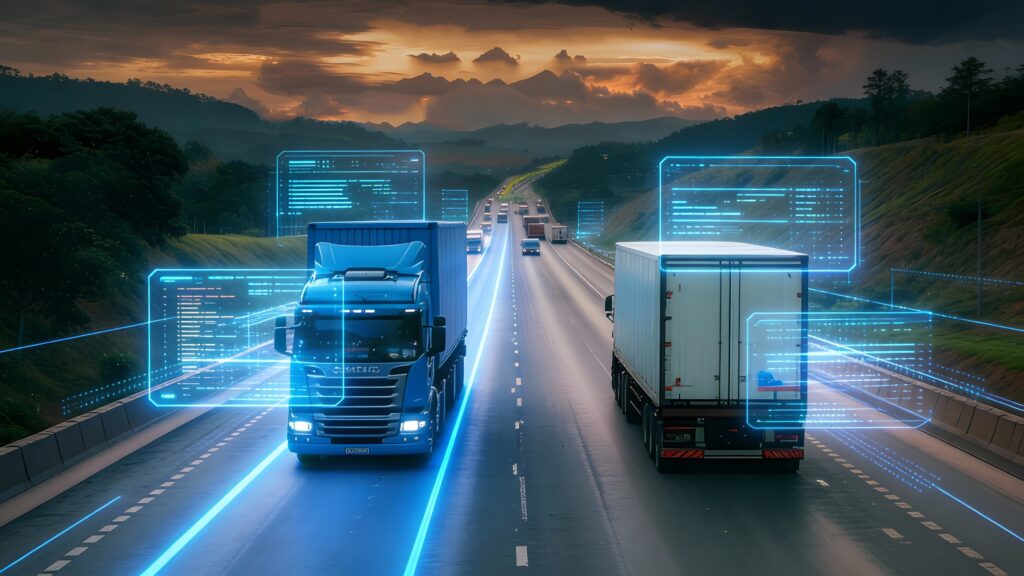
Route optimization AI has evolved far beyond the simple GPS navigation systems that revolutionized trucking two decades ago. Today’s smart route optimization considers dozens of variables simultaneously, creating solutions that no human dispatcher could calculate manually. The difference between traditional routing and AI-powered optimization is like comparing a paper map to a living, breathing intelligence that constantly adapts to the reality unfolding on the roads.
Modern route optimization AI doesn’t just find the shortest path between two points, it solves extraordinarily complex multi-variable optimization problems. These systems account for traffic patterns that vary by time of day and day of week, road conditions affected by weather and construction, delivery time windows with customer-specific preferences, vehicle capacity constraints and load compatibility requirements, driver hours of service regulations, fuel efficiency characteristics of different routes and speeds, toll costs that might make a longer route more economical, and even parking availability at delivery locations.
Dynamic rerouting capabilities represent another quantum leap in freight efficiency. When a traffic accident blocks a major highway, AI systems don’t wait for drivers to report the delay, they detect the disruption through real-time traffic feeds and automatically calculate alternative routes for every affected vehicle in the fleet. Weather-based adjustments reroute shipments around storms or icy conditions before drivers encounter dangerous situations. Priority shipment accommodation allows the system to reorganize routes mid-day when a high-value customer places an urgent order, seamlessly integrating the new stop without disrupting other commitments.
Logistics Automation: Streamlining Freight Operations End-to-End
Logistics automation powered by AI extends far beyond vehicles and routes, it’s transforming every administrative and operational process in the freight ecosystem. This comprehensive automation eliminates the tedious manual tasks that have consumed logistics professionals’ time for generations, freeing them to focus on strategic decision-making and customer relationships. The result is faster, more accurate operations that scale effortlessly as volume increases.
Automated dispatching and load assignment systems exemplify this transformation. Traditional dispatching requires experienced professionals to manually match available loads with appropriate vehicles and drivers, considering capacity, location, driver qualifications, and customer requirements. AI systems perform these matches instantaneously, processing thousands of variables to identify optimal pairings. The system considers not just the immediate shipment but the cascade effects, will this assignment position the truck for profitable backhaul opportunities? Does this driver prefer this type of route? Will this load balance the fleet’s positioning for anticipated demand tomorrow?
Digital documentation has eliminated mountains of paperwork that once buried freight operations. Electronic bills of lading, digital proof of delivery with photo verification, automated customs documentation for cross-border shipments, and digital freight auditing now handle processes that once required armies of clerks.
Real-Time Visibility and Control in AI-Driven Freight Networks
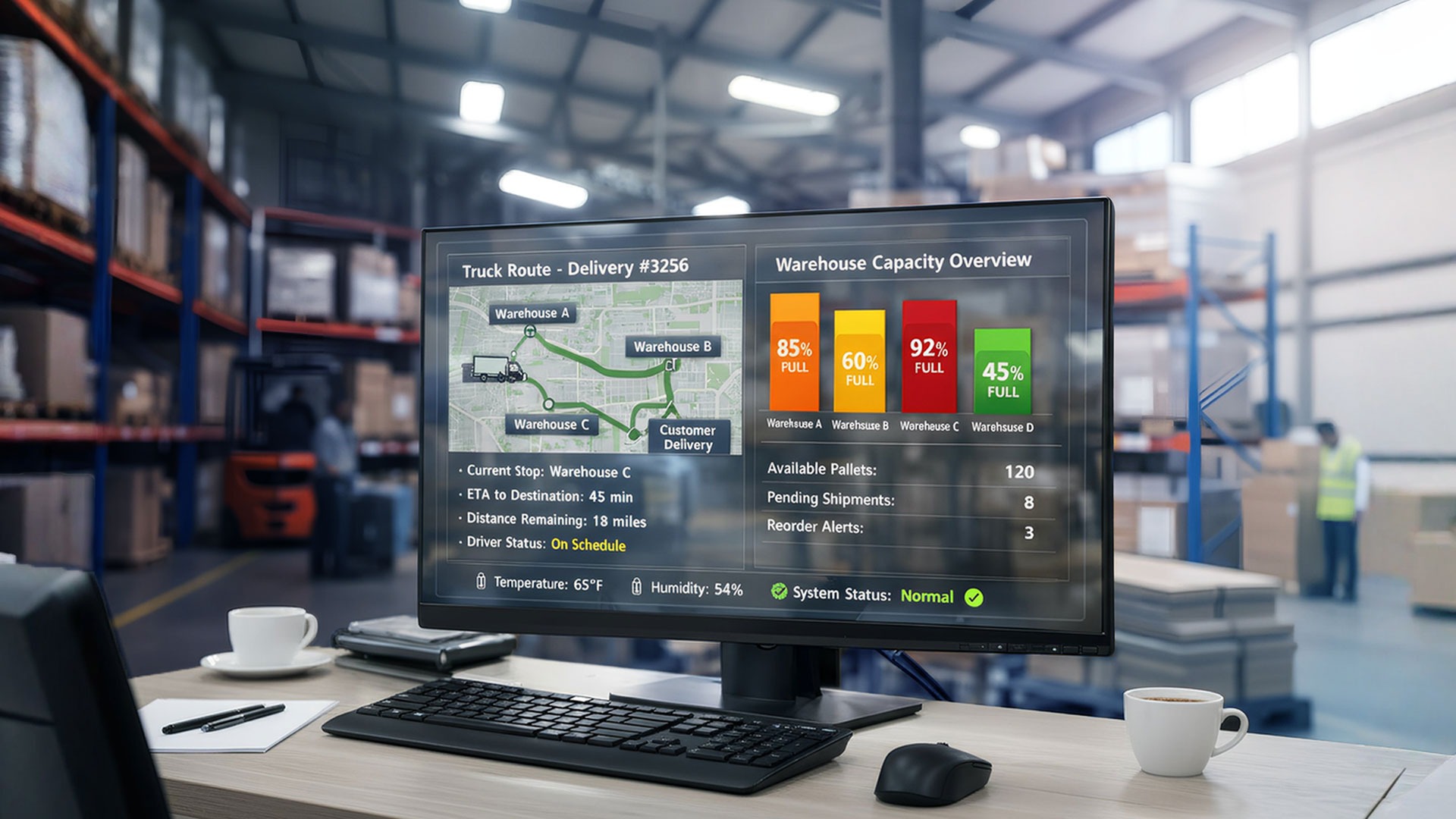
Real-time visibility has transformed from a luxury to an absolute necessity in modern freight operations, and AI has made comprehensive tracking not just possible but actionable. Today’s visibility platforms provide far more than simple location updates, they offer predictive insights, proactive alerts, and centralized control capabilities that allow logistics professionals to orchestrate complex multi-modal networks with unprecedented precision.
End-to-end shipment tracking in AI-driven systems captures granular detail about every aspect of freight movement. GPS-based location tracking with geofencing automatically triggers alerts when shipments enter or exit designated areas, enabling automated check-in processes and exception notifications. For temperature-sensitive pharmaceuticals or food products, IoT sensors continuously monitor conditions, with AI systems immediately flagging any deviations that could compromise product integrity. Security and theft prevention leverages computer vision and pattern recognition to identify suspicious activities or route deviations that might indicate hijacking attempts.
Predictive ETA calculations represent a dramatic improvement over the notoriously unreliable delivery estimates that have plagued freight for decades. Machine learning models analyze current location, traffic conditions, weather forecasts, historical performance on similar routes, driver behavior patterns, and remaining stops to calculate arrival times that are typically accurate within 15-minute windows. These predictions update continuously as conditions change, and automated customer communication systems keep receivers informed without requiring manual dispatcher intervention. When exceptions occur, a delay, a missed stop, a vehicle breakdown, the system immediately alerts relevant stakeholders and proposes solutions, often resolving issues before customers even notice a problem.
AI-Powered Demand Forecasting and Capacity Planning
Demand forecasting has always been critical to freight operations, but AI has elevated it from educated guesswork to scientific precision. The ability to accurately predict future freight volumes, anticipate seasonal fluctuations, and position capacity where it will be needed transforms logistics from a reactive scramble into a proactive orchestration. This predictive capability creates enormous competitive advantages for carriers and shippers who master it.
AI analyzes patterns across multiple data streams to predict freight demand with remarkable accuracy. Seasonal trend identification recognizes recurring patterns, the holiday shipping surge, agricultural harvest transportation, retail inventory restocking cycles. But modern AI goes far deeper, incorporating external factors that traditional forecasting missed entirely. Economic indicators like GDP growth, consumer confidence, and manufacturing indices provide leading signals of freight volume changes. Major events, concerts, sporting events, conventions, create predictable but localized demand spikes. Weather patterns affect not just routing but demand itself, as construction materials shipments pause during winter months while heating fuel deliveries surge.
Environmental Sustainability and Green Logistics
Environmental sustainability has emerged as both a regulatory requirement and a competitive differentiator in road freight operations. AI enabled systems are proving instrumental in reducing the industry’s carbon footprint while simultaneously improving operational efficiency, a rare win-win scenario where environmental responsibility and business performance align perfectly. The logistics sector accounts for approximately 8% of global greenhouse gas emissions, making improvements in this industry critical to climate goals.
AI reduces carbon emissions through multiple mechanisms that compound to create substantial environmental benefits. Optimized routes minimize total miles traveled, with route planning algorithms considering not just distance but also fuel efficiency factors like elevation changes, traffic congestion, and speed limits. Every mile eliminated represents fuel saved and emissions avoided. Load consolidation reduces the total number of vehicles needed to move a given volume of freight, maximizing trailer utilization and eliminating partially loaded trucks that burn fuel inefficiently. Speed optimization identifies the most fuel-efficient speeds for different route segments, often slightly below maximum speed limits, reducing consumption without significantly impacting delivery times.
Implementation Challenges and Best Practices
Despite the compelling benefits of AI enabled road freight, implementation remains challenging for many organizations. The gap between recognizing AI’s potential and successfully deploying it in operational environments involves navigating technical complexities, organizational resistance, financial constraints, and change management challenges. Understanding these obstacles and adopting proven best practices dramatically increases the likelihood of successful AI adoption.
Common obstacles begin with legacy system integration complexity. Most freight companies operate transportation management systems, warehouse management systems, and enterprise resource planning platforms that were implemented years or decades ago. These systems weren’t designed with AI integration in mind, creating technical challenges around data extraction, API connectivity, and real-time data synchronization. Data quality issues compound these challenges, historical records may be incomplete, inconsistent, or inaccurate, limiting the AI models’ ability to learn meaningful patterns. Organizational change resistance appears in multiple forms: drivers concerned about monitoring systems, dispatchers skeptical that algorithms can match their experience-based judgment, and executives worried about disrupting operations that, while imperfect, are at least predictable.
Read more about industry news
Industry Use Cases and Success Stories
Real-world implementations provide the most compelling evidence of AI enabled road freight’s transformative impact. Across industry sectors and company sizes, organizations are achieving measurable improvements that validate the technology’s promise. These success stories offer both inspiration and practical insights for companies considering their own AI journeys.
Large enterprise implementations demonstrate AI’s potential at scale. A Fortune 100 consumer goods manufacturer implemented AI-powered route optimization across its North American distribution network, encompassing over 2,000 trucks making 50,000+ deliveries weekly. The results were remarkable: 18% reduction in total miles driven, 14% decrease in fuel consumption, 22% improvement in on-time delivery performance, and annual savings exceeding $47 million. The competitive advantage extended beyond cost reduction, the company’s improved delivery reliability enabled it to win major retail contracts that competitors couldn’t match. A global logistics provider deployed predictive maintenance AI across its 15,000-vehicle fleet, reducing unplanned breakdowns by 71% and extending vehicle service life by an average of two years, creating nine-figure equipment cost savings.
Small and medium-sized carrier adoption examples demonstrate that AI benefits aren’t limited to enterprise-scale operations. A regional LTL carrier with 150 trucks implemented load optimization and route planning AI, increasing average loaded-mile percentage from 68% to 84% within six months. This efficiency gain effectively expanded the company’s capacity by 24% without purchasing a single additional vehicle, enabling it to accept new business and grow revenue by 31% year-over-year. The technology leveled the competitive playing field, allowing the regional carrier to offer service reliability and visibility capabilities that previously only national carriers could provide. A specialized heavy-haul carrier serving the construction equipment industry deployed predictive logistics AI that forecast project site readiness and coordinated deliveries with millimeter precision—a niche application that created substantial differentiation in a highly specialized market.
Industry-specific applications reveal how AI adapts to unique sector requirements. E-commerce fulfillment operations leverage last-mile delivery optimization that dynamically adjusts routes throughout the day as new orders arrive, enabling same-day and next-day delivery commitments that were previously impossible. One major online retailer reduced last-mile delivery costs by 27% while improving customer satisfaction scores through more accurate delivery windows. Just-in-time manufacturing operations use AI to coordinate inbound component deliveries with production schedules, eliminating costly production line stoppages due to missing parts. An automotive manufacturer reported 94% reduction in production disruptions attributed to logistics issues after implementing AI-powered supply chain synchronization. Cold chain management for pharmaceutical and food distribution benefits from AI monitoring systems that predict and prevent temperature excursions, ensuring product integrity while reducing spoilage rates by double-digit percentages.
The Future of AI in Road Freight: Emerging Trends and Innovations
The current state of AI enabled road freight, as impressive as it is, represents merely the beginning of a longer transformation journey. Emerging technologies and evolving capabilities promise to deliver even more dramatic improvements in efficiency, sustainability, and operational performance. Understanding these future trends helps logistics professionals prepare for the next wave of innovation and position their organizations to capitalize on coming opportunities.
Next-generation AI capabilities on the horizon include technologies that seem almost science-fiction today but are rapidly approaching commercial viability. Quantum computing applications in logistics optimization could solve complex routing and network design problems that are computationally intractable for classical computers, potentially finding solutions that are orders of magnitude more efficient than current best practices. Advanced autonomous vehicle technologies continue progressing toward full self-driving capability for long-haul trucking, with several manufacturers projecting commercial deployment within the next five years. Generative AI for scenario planning and simulation will enable logistics managers to rapidly test “what-if” scenarios, modeling how their operations would respond to disruptions, demand changes, or strategic shifts before committing resources to particular approaches.
Conclusion:
AI enabled road freight isn’t just a technological upgrade, it’s a fundamental reimagining of how goods move through our supply chains. The convergence of predictive logistics, smart route optimization, and comprehensive logistics automation is delivering measurable results that transform operational efficiency, sustainability, and customer satisfaction.
From reducing empty miles and optimizing fuel consumption to anticipating disruptions before they impact deliveries, AI is solving problems that have plagued the freight industry for decades. The companies embracing these technologies today are positioning themselves as tomorrow’s industry leaders, while those who delay risk being left behind in an increasingly competitive landscape.
The implementation journey requires careful planning, the right technology partners, and a commitment to organizational change. But the ROI is clear: reduced costs, improved service levels, enhanced safety, and a smaller environmental footprint. As autonomous vehicles, 5G connectivity, and next-generation AI capabilities continue to evolve, the transformation we’re witnessing today is just the beginning.